
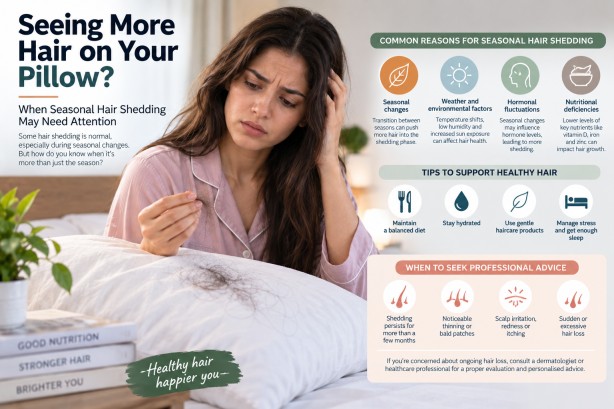
Noticing an increase in the amount of hair on your pillow, in your comb, or down the shower drain can be a cause for concern. While hair shedding can sometimes escalate with seasonal changes, it’s important not to dismiss all instances of excessive hair loss as merely a temporary seasonal adjustment. Observing the frequency, duration, and intensity of hair loss can help determine when it might be necessary to investigate further.
Hair naturally experiences cycles of growth, rest, and shedding. During certain periods, more hair may enter the shedding phase, which can make the amount of hair loss seem more prominent. Generally, mild seasonal shedding resolves on its own without significantly affecting overall hair density. However, if hair loss is persistent or becomes increasingly severe, it could be due to other factors and should not be automatically attributed to seasonal changes.
Excessive hair shedding differs from temporary shedding in its intensity and persistence. While temporary shedding is typically mild and improves over time, excessive shedding involves noticeable hair loss during activities such as washing or brushing. Individuals may observe thinning, especially around the parting or hairline. A sudden increase in hair loss, particularly if it lasts several weeks, warrants attention.
It is advisable to seek professional advice if you experience prolonged hair shedding lasting several months, visible scalp thinning, a marked reduction in overall hair density, concentrated hair loss in specific areas, or sudden heavy shedding. Hair loss following an illness, prolonged fever, major stress, significant weight loss, a restrictive diet, childbirth, or a medication change also requires closer examination. These patterns might be linked to temporary changes in the hair-growth cycle or other underlying causes.
Persistent hair loss can stem from various factors, including nutritional deficiencies, thyroid issues, hormonal fluctuations, significant stress, illness, rapid weight loss, or medication side effects. Gradual hair thinning may also be genetic. Since the reasons for hair loss can vary from person to person, it is more effective to seek evaluation rather than relying on assumptions. Supporting normal hair growth involves maintaining a balanced lifestyle, ensuring a nutrient-rich diet, managing stress, and adopting gentle hair care practices. If shedding is unusually heavy or causes noticeable thinning for an extended period, professional evaluation is recommended instead of waiting for the issue to resolve naturally.