
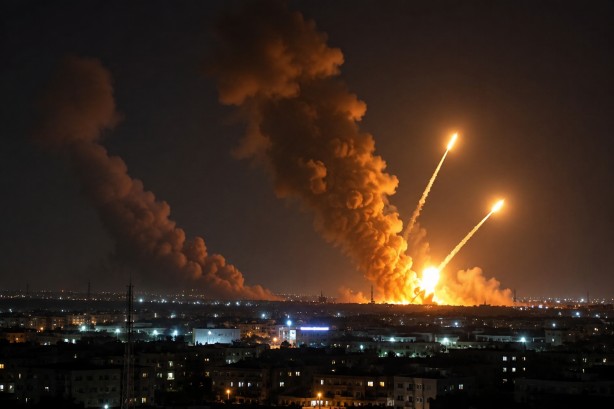
Following a brief lull in hostilities, the United States has resumed military strikes on Iranian targets, stirring fears of a broader conflict in the Middle East. The latest military action by the U.S. was prompted by an Iranian attack on an American military base located in Jordan, which houses U.S. troops. In response to Tehran’s actions, President Donald Trump issued a stern warning, stating that the U.S. would retaliate “very hard.”
According to U.S. Central Command, American forces executed a series of strikes over a two-hour timeframe, targeting multiple sites associated with Iran’s Revolutionary Guard Corps. The military’s focus was on various strategic installations, including command centers, missile and drone facilities, and coastal defense and surveillance sites. Iranian authorities have reported that explosions occurred on Qeshm Island, near the crucial Strait of Hormuz, as well as in the Khuzestan province, with state media confirming that at least two people sustained injuries.
This surge in military activity follows previous U.S. strikes on Iran-backed militias located in Iraq, which reportedly resulted in the deaths of several fighters and Iranian advisers. The escalation in hostilities has heightened concerns that the conflict could expand further across the region. Meanwhile, diplomatic attempts by international mediators to renew talks between Washington and Tehran have made little progress, remaining at a standstill.
The recent developments have also caused a significant reaction in global energy markets. Brent crude oil prices surged by more than 7% amid growing apprehensions about potential disruptions to oil shipments through key maritime routes in the Middle East. These tensions underscore the fragility of the geopolitical landscape and the critical importance of maintaining stability in the region’s energy corridors.